



Your Phone Is the Addiction Nobody Wants to Talk About
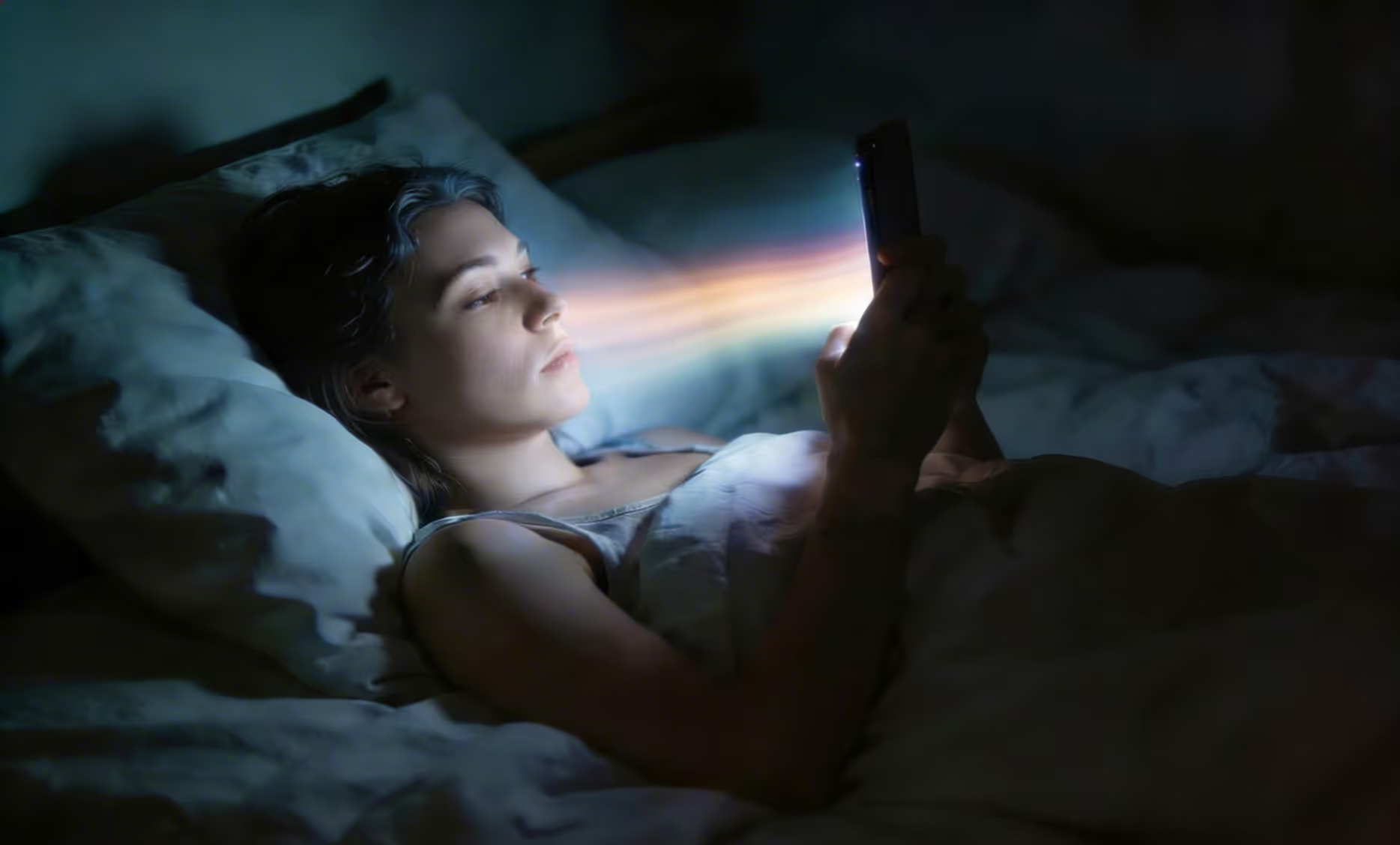
You're not "just checking" your phone. You're feeding a habit that hits the same brain circuits as nicotine, alcohol, and gambling - except this one lives in your pocket 24/7 and society tells you it's totally fine. Congrats, you're carrying your dealer everywhere you go. The average person checks their phone over 150 times a day and spends 7+ hours on screens. That's not usage. That's a relationship. A toxic one. Here's why your screen time is a bigger problem than you think, and how to actually claw it back.
🧠 Your Phone Is a Dopamine Slot Machine
Every notification, every like, every refresh - your brain gets a tiny hit of dopamine. Same chemical, same reward pathway as drugs and alcohol. The difference? Your phone was literally designed to exploit this. Variable rewards - sometimes you get a text, sometimes you don't, sometimes a video goes viral - that unpredictability is what makes it addictive. It's the same psychology behind slot machines, except the casino is in your hand, it never closes, and you bring it to the bathroom.
A 2025 review in Frontiers in Psychiatry found that excessive phone use weakens your prefrontal cortex's ability to control impulses while cranking up your amygdala - making you more reactive, more emotional, and more likely to keep reaching for that screen (frontiersin.org). Studies have even compared the frontal cortex effects to cocaine (premierhealth.com). That's not dramatic. That's neuroscience.
😶🌫️ What Screen Addiction Actually Looks Like
Nobody calls it addiction because everyone's doing it. But be honest with yourself for 10 seconds:
- You pick up your phone without even deciding to
- You feel anxious when it's not within reach
- You open Instagram, close it, then open it again 30 seconds later like a psychopath
- You say "5 more minutes" and suddenly an hour's gone
- You scroll right before bed and wonder why you can't sleep
- You reach for it the second you feel bored, awkward, or stressed
Sound familiar? That's not habit. That's your brain running on autopilot because it's been trained to seek the dopamine drip your phone provides. And just like any other addiction, when the phone goes away, you feel withdrawal - anxiety, irritability, restlessness, cravings (pmc.ncbi.nlm.nih.gov). Four symptoms that show up in literally every substance addiction.
💀 What It's Actually Doing to You
This isn't just "wasted time." Excessive screen use is linked to:
- Shrinking gray matter - brain regions tied to attention, motor coordination, and executive function literally reduce in volume with heavy use (pmc.ncbi.nlm.nih.gov)
- Wrecked sleep - blue light suppresses melatonin production, and doomscrolling before bed destroys your sleep cycle
- Anxiety and depression - 50% of teens spending 4+ hours on screens experience anxiety and depression symptoms
- Shortened attention span - your brain gets trained for instant gratification, making it harder to focus on anything that doesn't give an immediate reward
- Physical pain - headaches, neck strain, back pain, eye fatigue - your body wasn't built to stare at a glowing rectangle for 7 hours a day, but here we are, hunched over like Gollum protecting "my precious"
And here's the scary long-term stuff: scientists are now worried that early-life screen exposure could contribute to higher rates of Alzheimer's disease by 2060 (pmc.ncbi.nlm.nih.gov). We're literally speedrunning brain aging. Cool hobby.
🔁 Breaking the Scroll Loop
Just like quitting nicotine or alcohol, you can't just say "I'll use my phone less" and expect it to stick. You need to rewire the habits. Here's what actually works:
- Go grayscale. Switch your phone to black and white mode. Suddenly Instagram looks like a newspaper from 1942 and you lose interest real quick. A study on college students found grayscale mode actually reduced screen time (healthline.com). It's weirdly effective.
- Kill notifications. Every ping is a dopamine trigger. Turn off everything except calls and texts from real humans. Check apps on your schedule, not theirs.
- Phone out of the bedroom. Buy a $10 alarm clock like it's 2005. Your phone on your nightstand is the reason you doomscroll at midnight and check notifications before your eyes are even open.
🚫 Things That Won't Work
- "I'll just set a time limit" - and then you'll hit "ignore limit" every single time like it's a snooze button for your conscience. We both know this.
- Deleting apps for a day then redownloading - that's the screen time equivalent of "just one puff."
- Shaming yourself - guilt doesn't rewire dopamine pathways.
✅ What You Gain When You Unplug
People always focus on what they're "giving up." Nobody talks about what comes back:
- Conversations where you're actually present
- Sleep that actually feels like sleep
- A brain that can focus for more than 90 seconds (revolutionary, we know)
- Noticing things around you - the sky, people, your own thoughts
- Time. So much time. You'll be shocked how long a day feels when you're not feeding it to a screen
The first few days feel weird - like something's missing. That's normal. That's your brain adjusting to life without constant stimulation. It passes. And on the other side? Clarity you forgot existed.
💬 Final Real Talk
Your phone isn't evil. But the way it's designed to keep you hooked? That is. You didn't choose this addiction - it was engineered for you. Every scroll, every refresh, every notification was built to keep you coming back. Recognizing that is the first step.
You don't have to go full monk mode. Start small - grayscale, no phone in bed, 15 minutes of intentional disconnection. Build from there. Every minute you spend off-screen is a minute your brain gets to heal, reset, and remember what life feels like without a dopamine drip.
If screens are one of the habits pulling you down, NIXR's Recovery Coach can help you build a plan to take back control - not just from nicotine or alcohol, but from anything that's running your life on autopilot.

You ready?
It's never too late to start Day 1.