

Weed Isn't Harmless and Deep Down You Know It
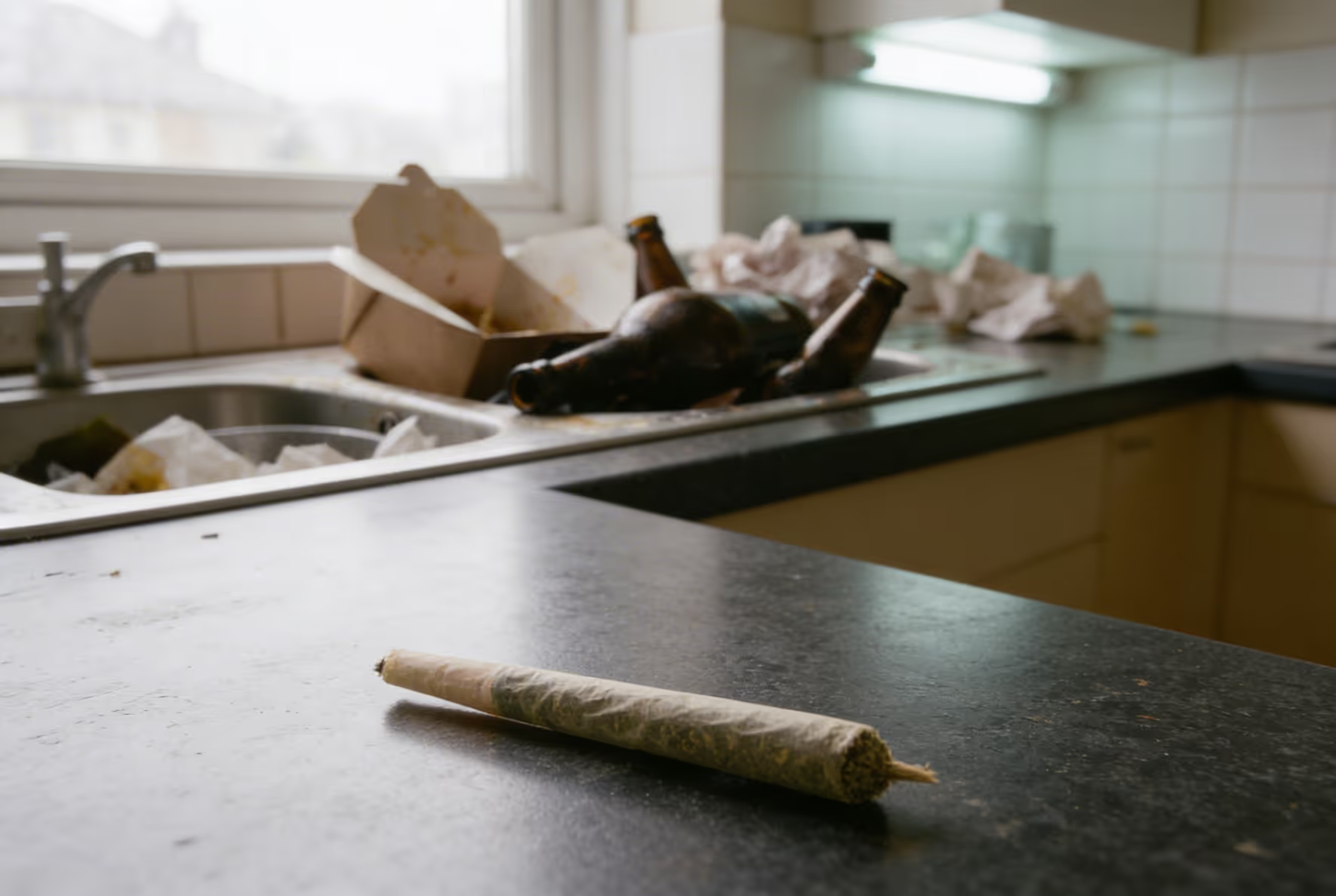
"It's just a plant, bro." Cool, so is poison ivy. The narrative that weed is this chill, risk-free vibe has been running unchecked for years and it's getting people stuck in habits they swear they don't have. Over 19 million Americans show signs of cannabis use disorder - cravings, withdrawal, can't quit even when they want to. Nearly 30% of them are between 18 and 25 (ncbi.nlm.nih.gov). But sure, it's "not addictive."
🧠 What Weed Actually Does to Your Brain
THC - the part that gets you high - works by flooding your brain's reward system with dopamine. Same system that nicotine, alcohol, and your phone exploit. At first, it feels amazing. That's the point. But your brain adapts. With regular use, your natural dopamine production drops, your receptors downregulate, and suddenly you need weed just to feel normal (pmc.ncbi.nlm.nih.gov). Not high. Normal. That's not recreational use anymore. That's dependency wearing a hoodie and pretending it's chill.
A 2025 study in JAMA Psychiatry found that people with cannabis use disorder had abnormally elevated dopamine in brain regions linked to psychosis - and the worse the habit, the higher the levels (sciencedaily.com). We're not talking stoner paranoia memes. We're talking actual hallucinations and delusions. The link between heavy weed use and schizophrenia symptoms is no longer a "maybe."
🧃 The "It's Not That Serious" Trap
Here's the thing nobody wants to hear: weed withdrawal is real. About 47% of regular users experience it when they stop (pmc.ncbi.nlm.nih.gov). It won't kill you like alcohol withdrawal can, but it's not nothing:
- Irritability that makes you unbearable to be around (ask your friends, they've noticed)
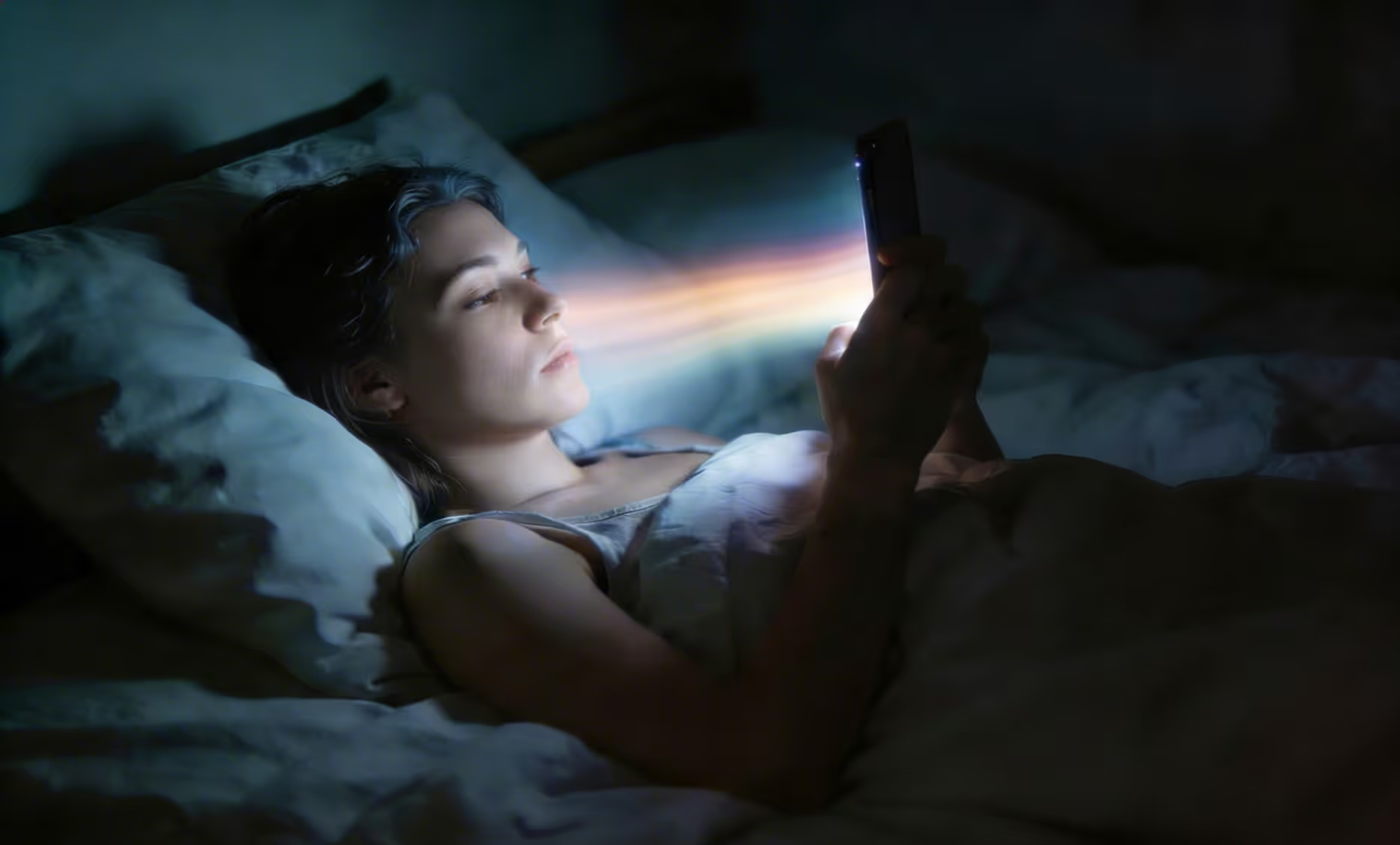
- Insomnia - your body forgot how to fall asleep without THC doing the work
- Anxiety that hits different when you don't have a joint to take the edge off
- Loss of appetite - food suddenly feels pointless
- Vivid, weird dreams that make you question your entire subconscious
And today's weed isn't your parents' weed. THC concentrations have been climbing for decades. Dabs and concentrates can hit 80%+ THC. The stronger the product, the harder the crash when you stop, and the faster dependency sets in.
🧒 Young Brains Get Hit the Hardest
If you're under 25, your brain is literally still under construction. The prefrontal cortex - the part responsible for decision-making, impulse control, and not texting your ex at 2 AM - doesn't finish developing until your mid-twenties. Introducing THC into that process is like remodeling a house while someone's jackhammering the foundation.
A 2025 review in Frontiers in Psychiatry found that adolescent cannabis users are three times more likely to develop cannabis use disorder than adults (frontiersin.org). Longitudinal studies show chronic teen use is linked to cognitive deficits in attention, memory, and problem-solving that can persist even after quitting (pmc.ncbi.nlm.nih.gov). Translation: the weed you're smoking at 17 might still be affecting your brain at 27. Not exactly the harmless experiment everyone pretends it is.
🔁 The Habit Loop Nobody Admits To
Most people don't even realize they're dependent because weed doesn't look like "real" addiction. There's no rock bottom moment, no dramatic intervention. It's more like a slow fade:
- Can't sleep without it
- Can't eat without it
- Can't relax without it
- Can't be bored without it
- "I can quit anytime" but you haven't tried in two years
Sound like someone you know? Maybe someone reading this right now? That's the sneaky part. Weed dependency doesn't scream at you. It whispers. It convinces you everything's fine while quietly becoming the thing you can't function without.
🚫 Things That Keep You Stuck
- "It's natural so it's safe" - so are mushrooms that'll shut your liver down. Natural doesn't mean harmless.
- "I'm more creative when I'm high" - studies actually show chronic use impairs cognitive function and motivation. You're not more creative, you're just less critical of bad ideas.
- "I only smoke at night" - that's what daily drinkers say about their "one glass of wine." A schedule doesn't make it not a dependency.
- "Everyone does it" - everyone checks their phone 150 times a day too. Popularity doesn't equal safety.
✅ What Quitting Actually Looks Like
The first 1-2 weeks are the roughest. Sleep is garbage, appetite is weird, your mood swings like it's trying to set a record. But here's the good news: unlike alcohol or benzos, cannabis withdrawal isn't dangerous. It's uncomfortable, annoying, and it makes you want to cave - but it passes.
After 2-3 weeks, most physical symptoms fade. What sticks around longer are the mental habits - the "I'm stressed so I'll smoke" loop, the boredom trigger, the social pressure. That's where the real work is.
What helps:
- Exercise. Your dopamine system needs a new source. Moving your body is the fastest natural reset.
- Fix your sleep hygiene. No screens before bed, cool room, consistent schedule. Your body will relearn how to sleep without THC - it just takes time.
- Tell someone. Even just one person. Accountability turns "I should quit" into "I'm actually quitting."
- Replace the ritual. If you always smoked after work, go for a walk instead. If it was a social thing, bring a drink or snack to occupy your hands. Your brain needs a new default.
- Give it 30 days. Not forever. Just 30 days. See how you feel. Most people are shocked by how much clearer their head gets.
💬 Final Real Talk
Nobody's saying weed is the devil. But pretending it's consequence-free is just as dishonest. If you can't go a week without it, that's information. If the thought of quitting makes you anxious, that's information too. You deserve to know what's actually happening in your brain instead of hiding behind "it's just a plant."
The goal isn't to judge anyone for using. The goal is to make sure you're choosing it - not needing it. And if you've crossed that line, NIXR's Recovery Coach can help you find your way back. No shame, no lectures, just a plan that actually works.
You ready?
It's never too late to start Day 1.