



What Actually Happens When You Stop Drinking
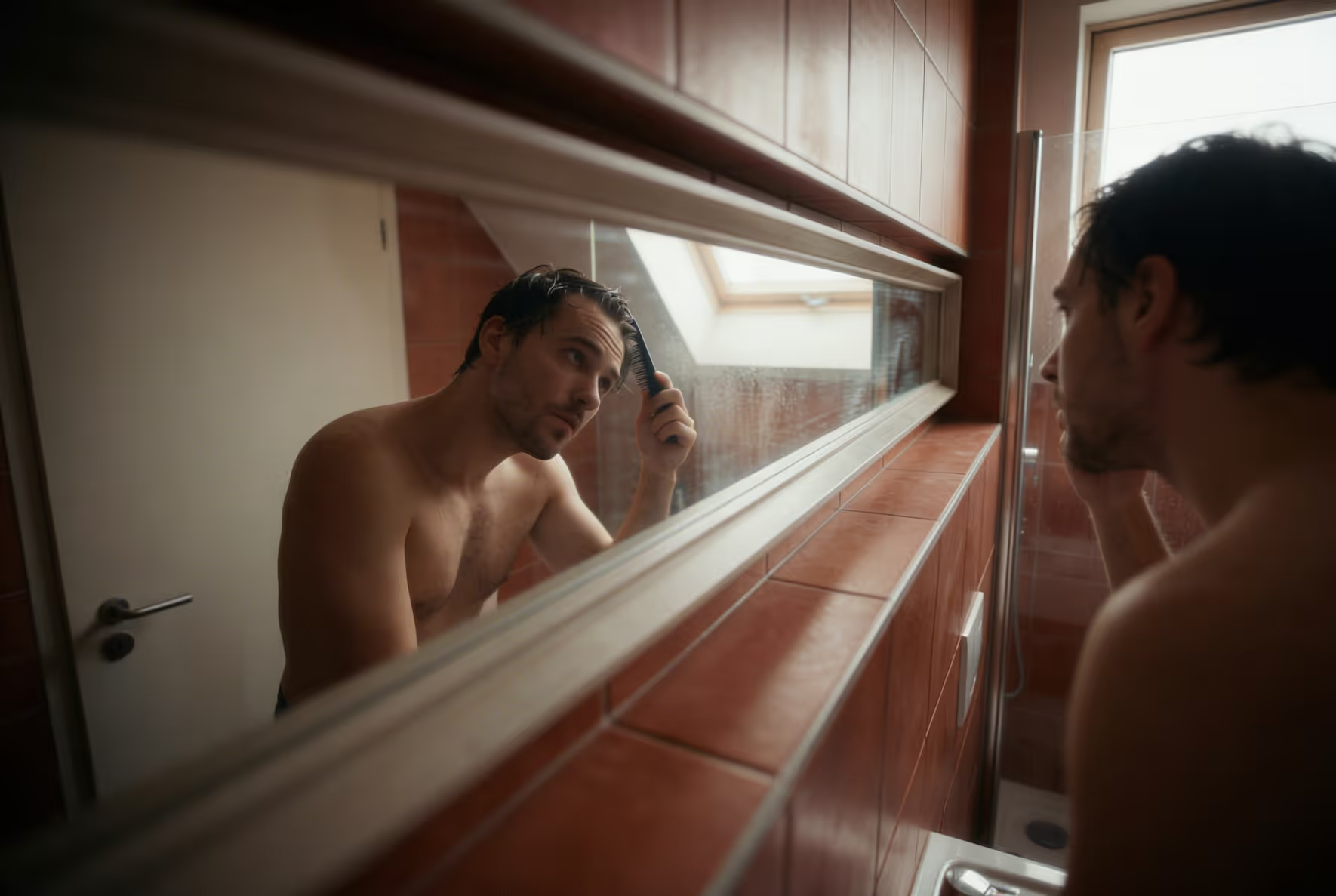
Quitting alcohol sounds simple until you're three days in, staring at the ceiling at 2 AM, wondering why your body feels like it's betraying you. Sobriety isn't just "not drinking" - it's rewiring a brain that's been marinating in a depressant for months or years. Here's what really happens when you stop, and how to survive it.
🧠 Why Your Brain Fights Back
Every time you drink, your brain adjusts. It dials down its own calming chemicals (GABA) and cranks up the excitatory ones (glutamate) to compensate for the alcohol doing the sedating. When you suddenly stop? Your brain is stuck in overdrive with no brakes. That's why withdrawal feels like anxiety on steroids - because chemically, it kind of is.
This isn't weakness. This is biology throwing a tantrum because you changed the rules.
⚠️ A Quick But Serious Note
Unlike nicotine or vaping, alcohol withdrawal can be genuinely dangerous. Seizures, hallucinations, and a condition called delirium tremens (DTs) are real risks for heavy, long-term drinkers. If you've been drinking daily or heavily for a long time, talk to a doctor before quitting cold turkey. Medical detox exists for a reason.
🌪 What the First Week Actually Feels Like
- Day 1-2: The Quiet Before the Storm: You might feel okay at first - maybe even proud. But as the hours tick by, anxiety creeps in. Your hands might shake. Sleep? Forget it. Your brain is recalibrating and it's not happy about it.
- Day 3-4: Peak Chaos: This is usually the worst of it. Cravings are loud. Your mood is a rollercoaster - one minute you're fine, the next you want to crawl out of your skin. Headaches, nausea, and that deep restlessness where you can't sit still but also can't focus on anything.
- Day 5-7: The Fog Starts Lifting: Physical symptoms ease up. You'll still feel off - sleep might be weird, appetite unpredictable - but there are moments where you feel genuinely clear for the first time in a while. Hold on to those moments. They multiply.
📈 What Gets Better (And When)
- Week 1-2: Sleep slowly improves. Anxiety starts fading. You stop waking up feeling like garbage.
- Month 1: Energy stabilizes. Bloating goes down. Your face might literally look different — less puffy, clearer skin. People will notice.
- Month 2-3: Mood levels out. Focus sharpens. You start remembering what it feels like to actually be present — in conversations, in the morning, in your own head.
- 6 Months+: Liver function improves. Weight normalizes. You'll look back and wonder how you ever thought you "needed" it.
🔁 Breaking the Drinking Loop
Alcohol hooks into routines harder than people realize. Friday night? Drink. Bad day at work? Drink. First date? Drink. Bored on a Tuesday? Drink. The chemical dependency is one battle — the habit loops are the longer war.
Here's what actually helps:
- Identify your triggers. Write down every situation where you'd normally drink. Stress, socializing, boredom, celebration - name them all. You can't dodge what you can't see.
- Swap the ritual. If you always cracked a beer after work, replace it with something - sparkling water, a mocktail, tea, even just a walk. Your brain needs a new "signal" that the day is winding down.
- Tell someone. Accountability isn't weakness. Text a friend, tell your partner, or use a recovery tool. Saying it out loud makes it real.
- Ride the cravings. They peak at about 10-15 minutes and then fade. Every single time. Distract yourself through that window - move, call someone, blast music — and you'll come out the other side.
- Rethink your social life. You don't have to ditch your friends, but you might need to skip the bar for a while. Suggest coffee, food, a walk - anything that doesn't revolve around a drink menu.
🚫 Things That Won't Help
- "Just have one." That's the addiction talking, and it's a liar.
- Keeping alcohol in the house "for guests." That's like hiding a vape in your drawer "just in case." You know how that ends.
- White-knuckling it alone. Willpower has a shelf life. Support systems - friends, apps, coaches, groups - are what make sobriety stick.
✅ The Stuff No One Tells You About Sobriety
People love talking about how hard quitting is. Nobody talks about waking up on a Saturday without a hangover and feeling like a superhero. Or having a conversation you actually remember. Or realizing you're funnier, sharper, and more present than you've been in years.
Sobriety isn't losing something. It's getting yourself back.
💬 Final Real Talk
The first week is brutal - no sugarcoating it. But it's also the shortest part of the entire journey. Every hour you don't drink, your brain heals a little more. Every craving you ride out makes the next one weaker. You're not depriving yourself - you're choosing clarity, control, and a version of yourself that doesn't need a substance to function.
Start with today. Just today. And when tomorrow comes, choose it again.
If you need backup, NIXR's Recovery Coach is built for exactly this - real support, real strategies, no judgment. You don't have to do this alone.
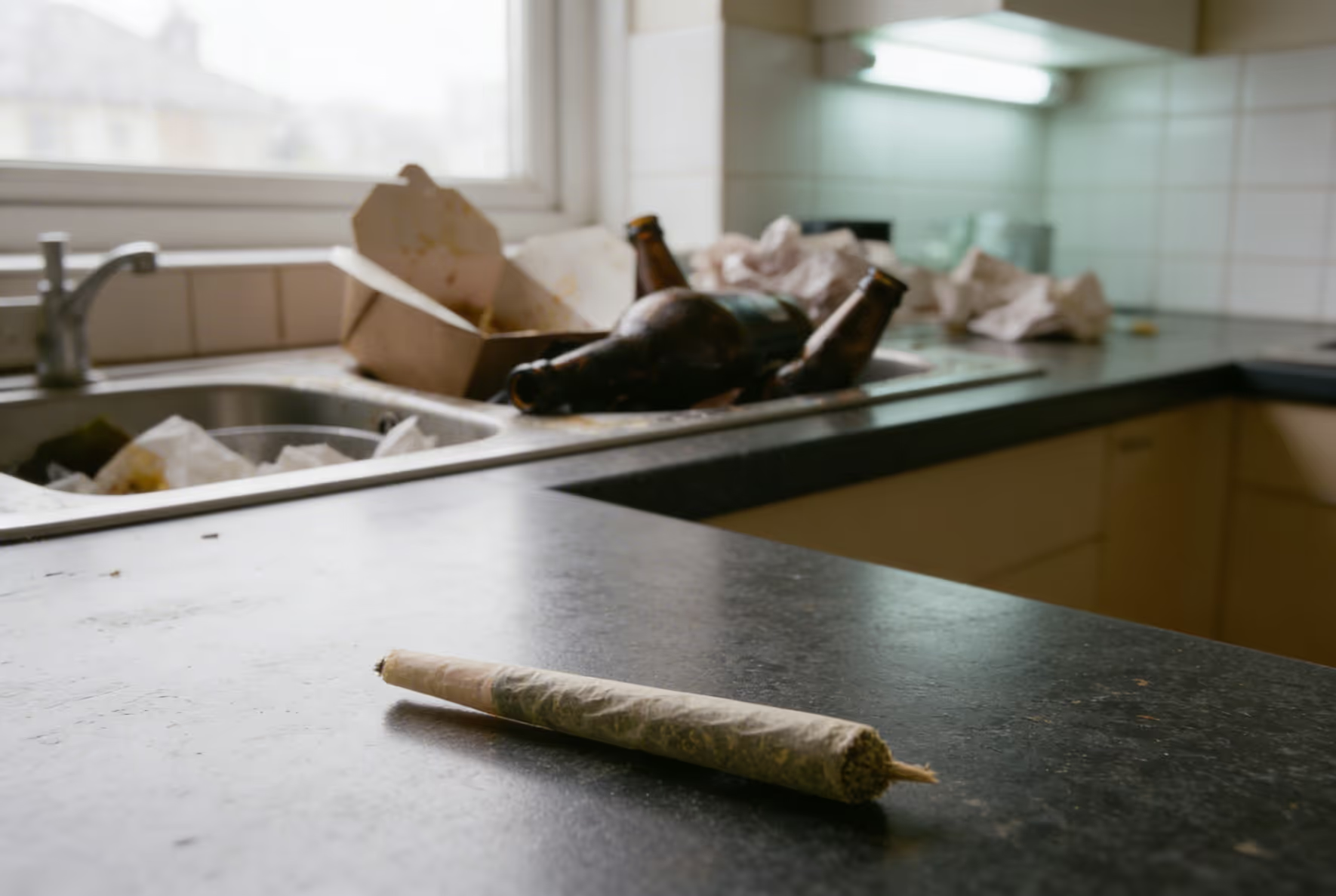

You ready?
It's never too late to start Day 1.